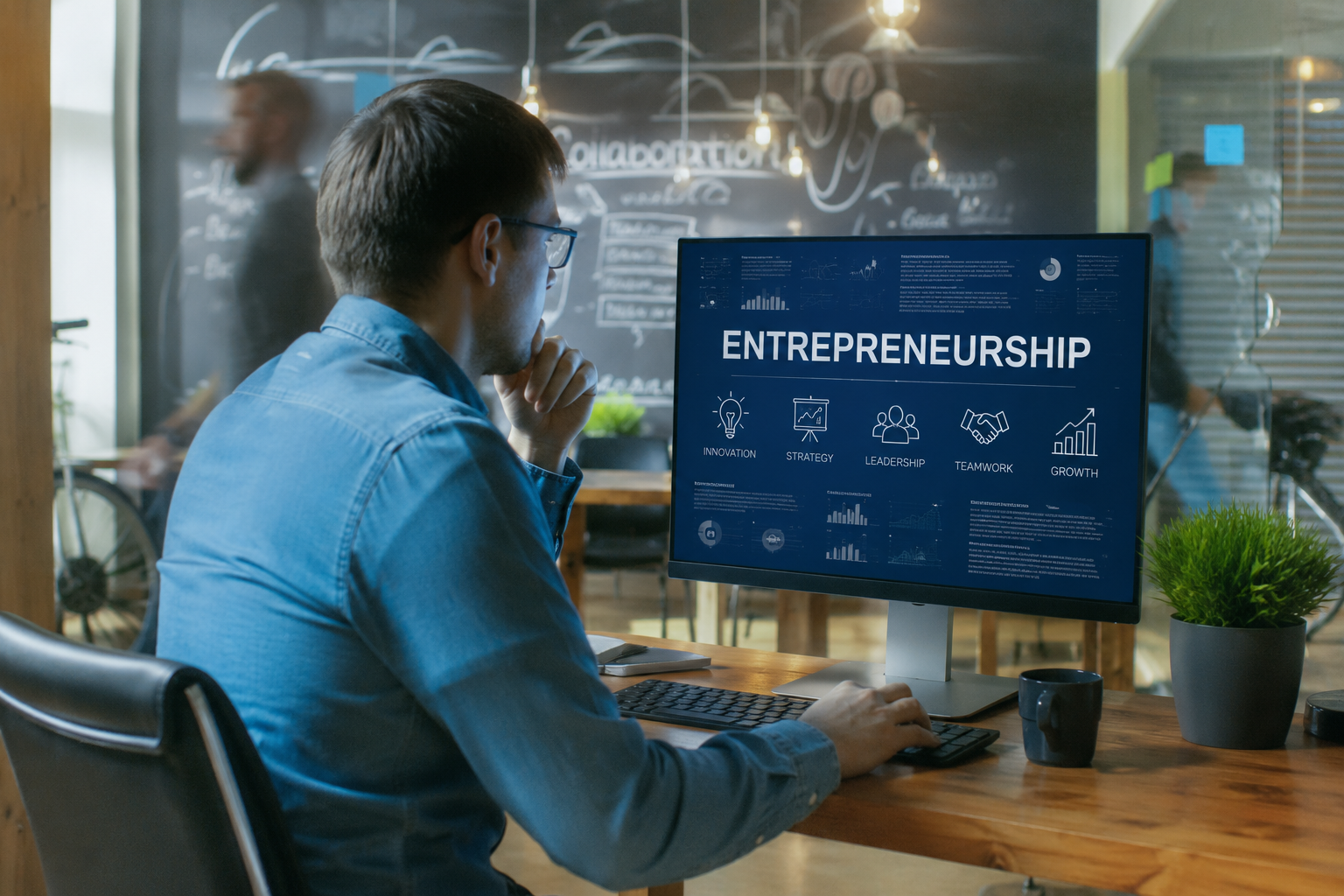
Summary: In 2026, a profound shift is underway as Americans redefine wealth creation, moving from traditional employment toward entrepreneurship and side hustles for autonomy and financial security. This movement is driven by AI tools lowering business barriers, job insecurity concerns, and a cultural redefinition of the American Dream. This article explores the trends, data, and practical steps behind this entrepreneurial pivot.
The Great American Wealth Reset: From Passive Employment to Active Ownership
A palpable shift is occurring in the American economic psyche. For decades, the traditional path to financial security involved securing a stable job with a single employer, climbing the corporate ladder, and retiring with a pension. However, the landscape of 2026 tells a very different story. The traditional “American Dream” of a steady paycheck is being rapidly replaced by a new aspiration: owning a business.
This isn’t just a niche trend; it’s a widespread movement. The 2026 Wells Fargo Money Study reveals that a significant 61% of all American adults believe owning a business is a core part of the American Dream. Among Gen Z, this sentiment jumps to a striking 69%. This data is more than a statistic—it represents millions of people looking to take control of their financial destiny in a world that feels increasingly uncertain. They are looking at entrepreneurship not just as a way to get rich, but as a way to gain control over their time, their income, and their future.
But what is causing this seismic shift? The answer is a complex mix of anxiety, opportunity, and technological empowerment. As we navigate through 2026, it’s becoming increasingly clear that the old rules of wealth-building no longer apply. The corporate ladder has become shaky, and the safety nets that once protected workers have been replaced by a gig economy that demands adaptability and self-reliance.
Take Sarah Mitchell, a 34-year-old marketing professional from Austin, Texas. After being laid off twice in three years from corporate positions, she decided to launch her own digital marketing consultancy in early 2025. Today, her business generates $180,000 annually, and she employs two part-time contractors. Sarah represents a growing demographic of Americans who have realized that job security is an illusion and that true financial safety comes from building something of your own.
Why 2026 Is the Year of the Entrepreneur: Drivers of the Shift
Several converging factors are pushing Americans away from traditional employment and toward self-reliance. It’s a perfect storm of necessity and innovation that has created unprecedented opportunities for those willing to take the leap.
1. The Rise of Job Insecurity
The safety net of traditional employment is fraying. The Wells Fargo study found that while 17% of all full-time employees worry about losing their jobs, that number nearly doubles to 31% for Gen Z adults. This anxiety is a powerful motivator. People are asking themselves, “If my job isn’t secure, why am I building someone else’s dream?” This fear is compounded by the feeling that a single paycheck is no longer enough. Nearly half of consumers (47%) report putting more into savings over the past year, a defensive posture against economic volatility.
Consider the story of James Rodriguez, a 29-year-old from Phoenix who worked in corporate logistics for six years. When his company announced a 15% workforce reduction, James realized that his entire financial future was dependent on decisions made by executives who didn’t know his name. He used his severance package to launch an e-commerce business selling sustainable outdoor gear. Within 18 months, he was matching his previous salary and had regained the peace of mind that came with controlling his own destiny.
2. The Side Hustle as a Gateway Drug to Entrepreneurship
The side hustle is no longer a fringe activity; it’s a financial necessity for a huge swath of the population. The Omnisend Side Hustle Report 2026 found that 28% of Americans currently have a secondary income stream. Collectively, these side hustles generate a staggering $84.1 billion per month in the US.
This data reveals a powerful dynamic. For many, the side hustle starts as a way to cover bills or pay off debt. However, this “hustle” often becomes the proving ground for a future business. The MyPerfectResume survey reinforces this, finding that a remarkable 72% of Americans rely on at least one source of secondary income. As people become more adept at monetizing their skills or selling products online, they begin to see the potential to transition from a side gig to full-time entrepreneurship.
Maria Chen, a 41-year-old mother of two in Chicago, started selling handmade jewelry on Etsy in her spare time while working as a dental hygienist. When her side income surpassed her day job earnings in 2025, she made the transition to full-time entrepreneurship. Today, she employs five artisans and sells through multiple online marketplaces, generating over $350,000 in annual revenue. Her story exemplifies how side hustles are becoming the new entry point for the American Dream.
3. AI: The Great Equalizer
Perhaps the most significant enabler of this entrepreneurship shift is Artificial Intelligence. Technology is fundamentally changing who can become an entrepreneur and how quickly they can succeed. At the World Economic Forum’s Davos 2026 panel on innovation and AI, LinkedIn’s Editor-in-Chief Daniel Roth noted a 60% year-on-year rise in users adding “founder” to their profiles.
AI is lowering the barriers to entry that once protected large corporations. It allows solo founders or lean teams to compete with established companies by:
- Prototyping Faster: AI tools can help design products, write code, and create marketing materials in a fraction of the time. What once required a team of developers and designers can now be accomplished by one person with the right AI tools.
- Reaching Customers Directly: Algorithms on platforms like Google, Meta, and TikTok allow even the smallest businesses to target their ideal customers with surgical precision. This means a solopreneur can compete with million-dollar marketing budgets by using AI to optimize ad spend and targeting.
- Automating Operations: From customer service chatbots to automated accounting, AI handles the administrative burden, freeing entrepreneurs to focus on strategy and growth. As one industry expert noted, “AI is not just lowering the barriers to starting a business. It may be quietly removing the safety net of traditional careers, pushing more people toward entrepreneurship.”
David Park, a 26-year-old entrepreneur from Seattle, built a SaaS platform for independent fitness trainers with the help of AI coding assistants. He launched his company with zero capital and only basic coding knowledge. Today, his platform serves over 3,000 trainers across 12 countries, generating $500,000 in annual recurring revenue. Without AI tools, this would have been impossible.

The New Model of the 2026 Entrepreneur
This new wave of entrepreneurs is not your father’s small business owner. They are leveraging modern tools to build companies that are lean, global, and technology-native. The face of entrepreneurship has evolved dramatically, and understanding this new model is crucial for anyone considering the entrepreneurial path.
1. The Rise of the “Solopreneur” and “Micro-Multinationals”
Forget the image of a bustling office with dozens of employees. The 2026 entrepreneur is more likely to be a “solopreneur” or part of a “lean micro team.” As highlighted in ICSB’s Top Ten Trends for 2026, individuals are building high-impact, one-person enterprises enabled by digital tools and direct-to-consumer channels. These companies are often born global, operating as “micro-multinationals” from day one. They leverage cross-border e-commerce and remote talent to sell internationally without the overhead of a physical presence abroad.
This means a single person sitting in a home office in Ohio can now run a business that sells handmade goods to customers in Europe and Australia. The global marketplace has become accessible to anyone with an internet connection and a viable product or service. This democratization of commerce is one of the most significant economic developments of our time.
Jennifer Thompson, a 38-year-old solopreneur from Nashville, runs a digital design agency that serves clients in the United States, United Kingdom, and Australia. She manages everything from sales to delivery using project management tools, video conferencing, and AI-powered design assistants. Her annual revenue exceeds $200,000, and she works from wherever she chooses, embodying the freedom that draws so many to this new model of work.
Read more: The Great Digital Asset Shift: What Smart Investors See That Others Are Still Missing
2. Alternative Funding: Moving Beyond the VC Model
In the past, scaling a business often meant begging venture capitalists for money and giving up a large chunk of equity. In 2026, this model is being disrupted. Alternative funding options are empowering founders to retain more control and build their businesses on their own terms.
- Revenue-Based Financing: This allows founders to get capital in exchange for a percentage of future revenue, avoiding equity dilution. It’s an especially attractive option for businesses with predictable revenue streams that want to grow without sacrificing ownership.
- Crowdfunding and Syndicates: Platforms like Kickstarter, Indiegogo, and new investment syndicates are democratizing access to capital, allowing businesses to be funded by their future customers rather than a handful of investors in Silicon Valley. This approach also builds a loyal customer base before the product even launches.
Take the example of GreenLeaf Organics, a sustainable skincare company founded by two sisters in Portland. Instead of pursuing venture capital, they raised $250,000 through a crowdfunding campaign, building a community of 5,000 passionate customers who became brand ambassadors. Their company is now profitable, and they maintain full ownership and control.
3. Authenticity as a Competitive Advantage
In an increasingly automated and digital world, the “human touch” has become a powerful differentiator. Consumers in 2026 are yearning for authenticity and genuine human connection. The ICSB calls this “The Resurgence of the Human Touch,” where MSMEs (Micro, Small, and Medium Enterprises) shine because they offer personalized service, craftsmanship, and relationships that algorithms simply cannot replicate.
This means entrepreneurs are succeeding not just by offering a product, but by telling a story, building a community, and connecting with customers on a personal level. In a world of faceless corporations, the entrepreneur who shows their face, shares their journey, and genuinely engages with their customers has a significant advantage.
Consider the success of Artisan Coffee Roasters, a small business in Denver that shares behind-the-scenes content on social media, responds personally to every customer comment, and even invites customers to virtual roasting sessions. Their authenticity has created a loyal following that generates consistent sales, even as larger competitors struggle to connect with increasingly discerning consumers.

The Wealth Transfer: A Generational Shift in Assets and Values
Beyond the rise of the entrepreneur, the 2026 wealth landscape is also being reshaped by one of the largest intergenerational wealth transfers in history. An estimated $83 trillion globally, with $29 trillion coming from the United States alone, is expected to move from the Baby Boomer generation to their Millennial and Gen Z heirs over the next two decades.
This transfer is not just about money changing hands; it’s about a fundamental shift in values and investment strategies. The recipients of this wealth are approaching money, work, and business very differently than their parents did.
A New Approach to Wealth
The Bank of America 2026 Study of Wealthy Americans found that younger inheritors are largely skeptical of traditional investments. Among Gen Z and Millennial respondents, 67% said they no longer believe traditional stocks and bonds can deliver above-average returns. This skepticism is driving them toward alternative assets. Younger investors are allocating an average of 15% of their portfolios to private market alternatives and 13% to cryptocurrency, a mix starkly different from their parents’ generation.
This is where the “entrepreneurship shift” intersects with the “wealth transfer.” Younger inheritors are not content to just park their money. They are looking to deploy it in ways that align with their values and desire for impact. The Boston Consulting Group’s 2026 Global Wealth Report notes that for many successors, the family business and wealth are intertwined, but they often see things differently than their founders. They may want to pursue new ventures, invest more broadly, and align their wealth with their personal ambitions.
Emily Rosen, a 32-year-old who inherited a $5 million portfolio from her grandfather, liquidated much of the traditional holdings to invest in renewable energy startups and social impact ventures. She also launched her own sustainable fashion brand, viewing entrepreneurship as the most meaningful way to deploy her inherited capital. Her approach reflects a broader trend among her generation.
Owning a Business is the New Status Symbol
The data from the Wells Fargo study confirms that this wealth is fueling entrepreneurial ambition. The study shows that 74% of Gen Z adults who do not own a business want to own one someday. This is not just a desire for money; 80% of Gen Z adults say owning a business would allow them to control their own destiny. It suggests that for many in the younger generation, the ultimate use of inherited or accumulated wealth is to buy their own freedom and build something of their own.
This represents a profound cultural shift. In previous generations, status came from working for a prestigious company or accumulating material possessions. In 2026, status increasingly comes from being your own boss and building something meaningful. The corporate ladder has been replaced by the entrepreneurial playground.
Read more: BEYOND BITCOIN: THE DIGITAL ASSET TRENDS RESHAPING HOW AMERICANS THINK ABOUT MONEY AND INVESTING
Practical Advice: How to Navigate and Thrive in the New Economy
The shift to entrepreneurship in 2026 is exciting, but it is not without its risks. The Wells Fargo study found that 86% of business owners have had to make personal financial sacrifices to fund their business. To navigate this new landscape successfully, a strategic approach is essential. Here is practical guidance for both aspiring entrepreneurs and those receiving inherited wealth.
For the Aspiring Entrepreneur
Start Before You Leap:
Don’t quit your day job just yet. The side hustle is your perfect testing ground. Use your evenings and weekends to validate your business idea. Can you make $500-$1000 per month consistently? This proves there is a market demand for your product or service before you risk your primary source of income. Starting small allows you to learn, iterate, and build confidence without financial devastation.
Leverage AI as Your Co-Pilot:
Don’t be intimidated by AI—embrace it. Use it for market research, content creation, financial management, and automating tedious tasks. This allows you to punch far above your weight class, acting like a team of specialists even if you’re a team of one. The entrepreneurs who succeed in 2026 are those who master AI tools to multiply their productivity and effectiveness.
Master Your Financial Infrastructure:
One of the biggest challenges for side-hustlers and small business owners is financial management. Monzo’s research found that 80% of side-hustlers report facing money-related challenges, such as irregular income, mixing personal and business finances, or unexpected tax bills. The solution is to get organized from day one. Open a separate business bank account, set aside money for taxes, and use accounting software to track your income and expenses. As the Monzo study suggests, using the right business banking tools can build confidence and even help turn a side hustle into a main gig.
Build Your Community:
Success in 2026 is rarely achieved in isolation. Join online communities, find a mentor, and network with other entrepreneurs. In a fragmented and digital world, the support and advice of a peer group can be invaluable. Consider platforms like LinkedIn, local meetups, and industry-specific forums where you can connect with like-minded individuals who understand your journey.
For Those Receiving Inherited Wealth
Plan for Succession, Not Just for Assets:
Receiving an inheritance is the easy part; preserving and growing it is the challenge. The BofA study found that while 78% of wealthy business owners consider succession planning important, only 20% have a fully documented plan. This isn’t just about dividing assets; it’s about preparing the next generation to be responsible stewards of that wealth. As the BCG report emphasizes, successful succession is less about a single handover and more about an extended process of “design.”
Don’t Neglect Communication:
One of the greatest risks to inherited wealth is family discord. As one wealth advisor noted, “The problems are not a lack of money, but a lack of communication.” Families that sustain wealth across generations tend to have open and structured conversations about values, expectations, and the purpose of their wealth. This includes creating mechanisms like family councils or formal governance structures to manage tensions before they become fractures.
Align Your Wealth with Your Values:
The younger generation is less interested in owning a classic car collection and more interested in living an international lifestyle or making an impact. If you’re inheriting a business you don’t want to run, or a portfolio filled with assets you don’t believe in, have the courage to realign it. As the experts note, many younger heirs view money not as an end in itself, but as a “tool” to achieve their goals. Use it to build a life and a legacy that you are passionate about.
10 Trending FAQs on the 2026 Entrepreneurship Shift
1. Why are so many Americans starting side hustles in 2026?
The primary driver is financial necessity. Rising costs of living, stagnant wages, and job insecurity are pushing people to seek secondary income to cover bills and save for the future. The Omnisend Side Hustle Report found that 28% of Americans currently have side income streams, generating $84.1 billion collectively each month. Additionally, the side hustle serves as a low-risk testing ground for full-time entrepreneurship, allowing people to validate business ideas before making the leap.
2. What are the most popular types of side hustles this year?
Ecommerce leads the way, with 41% of American side-hustlers selling or reselling products online. Other popular categories include freelancing in areas like writing, design, and consulting; food delivery and rideshare driving; content creation through platforms like YouTube, TikTok, and Substack; and digital services such as virtual assistance and social media management. The diversity of options means there’s a side hustle for nearly every skill set and interest.
3. How is AI impacting the ability to start a business?
AI is acting as a “great equalizer,” lowering the barriers to entry significantly. It allows solopreneurs to handle tasks that once required entire teams—like coding, marketing, financial analysis, and customer service. AI-powered tools can help with everything from market research and product design to content creation and automated sales funnels, enabling individuals to build scalable businesses with minimal capital and technical expertise.
4. What is a “solopreneur” and why is the concept trending?
A solopreneur is a high-impact, one-person enterprise that leverages digital tools and AI to build and run a profitable business without a large staff or office. The trend is driven by digital tools, no-code platforms, and AI that allow one person to handle operations that once required a team. Solopreneurs are able to compete with larger companies by being more agile, cost-effective, and personally connected to their customers.
5. Is venture capital still the main source of startup funding?
Not necessarily. While venture capital remains important for certain types of high-growth startups, alternative funding models are gaining significant traction. Revenue-based financing allows founders to access capital without giving up equity, while crowdfunding platforms like Kickstarter and Indiegogo enable businesses to be funded by future customers. Angel syndicates and peer-to-peer lending are also providing more options for entrepreneurs who want to maintain control of their companies.
6. What does the $83 trillion wealth transfer mean for the economy?
It means a massive transfer of assets from baby boomers to millennials and Gen Z over the next two decades. This is expected to reshape investment strategies, increase entrepreneurship, and shift capital toward alternative assets like private markets and crypto. Younger generations are more likely to invest in businesses they believe in and to pursue entrepreneurial ventures themselves, potentially creating a wave of innovation and new business creation.
7. Do young people still believe in the American Dream?
Yes, but they are redefining it. The Wells Fargo study shows most young people equate the American Dream with owning a business, which they see as a path to controlling their own destiny rather than climbing the corporate ladder. For this generation, the traditional markers of success—a house in the suburbs, a corner office, and a gold watch at retirement—have been replaced by flexibility, autonomy, and the ability to build something meaningful.
8. How can I manage finances for my side hustle?
The key is separation. Open a separate business bank account, track all income and expenses, and set aside a portion for taxes. Using proper financial tools like QuickBooks, FreshBooks, or Wave can help avoid the common pitfall of mixing personal and business finances. It’s also essential to understand your tax obligations, including self-employment tax and quarterly estimated payments, to avoid surprises come tax season.
9. Is the “human touch” still important in an AI-driven economy?
Absolutely. As automation increases, customers are seeking genuine human connection, authenticity, and personalized service, which is an area where small businesses and solopreneurs can strongly compete. In a marketplace dominated by algorithms and automated interactions, the entrepreneur who offers authentic engagement and builds real relationships has a significant competitive advantage.
10. What are the biggest risks for families inheriting wealth?
The biggest risk is often internal: lack of communication and poor succession planning. Without a clear plan and open dialogue, family disputes can quickly erode even the most substantial fortunes. Other risks include inadequate financial literacy among heirs, the pressure of sudden wealth, and the potential for family members to have conflicting visions for the wealth. Professional advisors, family councils, and structured communication can help mitigate these risks.
Conclusion: A Future Built on Autonomy and Resilience
The entrepreneurial shift of 2026 represents a fundamental rewriting of the American economic narrative. The era of the “company man” is being replaced by an era of the “autonomous individual.” Faced with an insecure job market, empowered by powerful new AI tools, and inspired by a desire for control and meaning, millions of Americans are taking their financial futures into their own hands.
This is not a story of just creating businesses; it’s a story of creating resilience. Whether through a side hustle, a solopreneur venture, or a lean startup, people are building a safety net made not of company promises, but of their own skills, ideas, and hard work. For those ready to make the leap, the timing has never been better. The path is challenging, but the reward—the ability to control your own destiny—is the new American Dream.
The data is clear: Americans are embracing entrepreneurship in unprecedented numbers. The tools to succeed are more accessible than ever before. The cultural attitudes toward risk and ownership have shifted dramatically. And the intergenerational transfer of wealth is creating new opportunities for those ready to seize them.
The question is no longer whether you can become an entrepreneur, but whether you’re ready to take the first step. The economy of 2026 rewards those who are willing to build something of their own, who are ready to embrace the challenges and opportunities of self-employment, and who understand that true wealth comes not just from what you earn, but from what you build and control.
As we look toward the future, one thing is certain: the entrepreneurship shift is not a passing trend. It’s a fundamental transformation of how Americans work, build wealth, and define success. Those who embrace this change and take bold action today will be the ones who thrive in the economy of tomorrow.