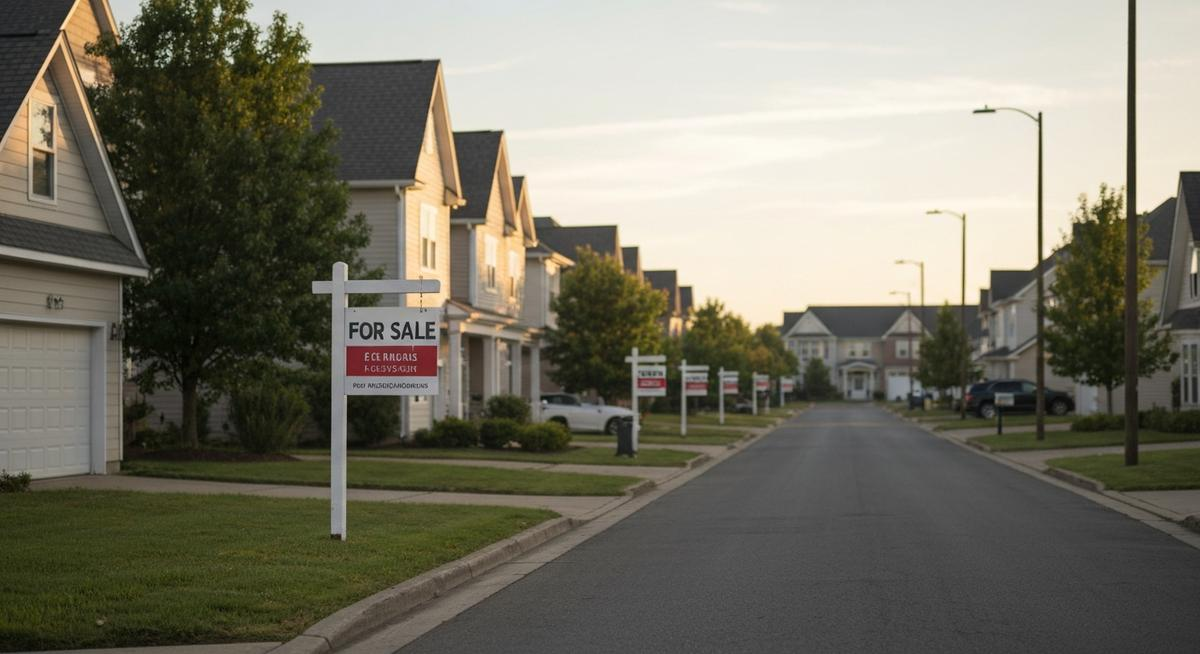
Buying a house in 2026 is becoming a more complicated decision as mortgage rates, home prices, and housing inventory continue to shift. Waiting until 2027 could bring better affordability or more negotiating power, but it could also mean higher prices or renewed competition. The smartest choice depends on your finances, local market, job stability, and long-term housing plans.
The US Housing Market in 2026: Why Buyers Are Rethinking Their Timing
For many Americans, buying a home is no longer simply about finding the right property. It is about deciding whether the financial commitment makes sense at a time when mortgage rates remain elevated, home prices are still expensive, and household budgets are under pressure.
A buyer earning $100,000 annually may qualify for a mortgage on paper but still struggle with the actual monthly cost after property taxes, homeowners insurance, utilities, maintenance, and other expenses. Another buyer with a larger down payment and stable income may find today’s market more manageable, particularly if sellers are willing to negotiate.
This is why the question of buying in 2026 versus waiting until 2027 deserves a closer look.
The latest available housing data suggests the market is gradually offering buyers more choices, although affordability remains a significant challenge. According to the National Association of Realtors (NAR), existing-home sales increased 1.5% in September 2026 to a seasonally adjusted annual rate of 3.99 million. However, sales remained 2.2% below the previous year.
The median existing-home price reached $417,500, representing a 1.3% annual increase. Housing inventory also improved, reaching 1.60 million homes, equivalent to 4.8 months of supply. nar.realtor
These figures suggest that buyers may have more negotiating opportunities than they did during the most competitive housing-market periods. However, a modest increase in inventory does not automatically make homes affordable.
Mortgage rates are another important part of the decision. Freddie Mac reported that the average 30-year fixed mortgage rate was 7.18% on November 5, 2026, compared with 6.22% a year earlier. Freddie Mac
For buyers, that difference can translate into hundreds of dollars in additional monthly interest and principal payments.
The real question is not whether 2027 will definitely be better. Nobody can reliably promise that. The more useful question is whether waiting gives your household a realistic financial advantage.
1. Mortgage Rates: Could Waiting Until 2027 Save You Money?
Mortgage rates are among the biggest reasons potential buyers are delaying their purchases.
When rates rise, the same home becomes more expensive to finance. When rates fall, buyers may qualify for larger loans or reduce their monthly payments without needing a lower purchase price.
However, mortgage-rate predictions should be treated carefully. Rates respond to several factors, including inflation, Treasury yields, economic growth, Federal Reserve policy expectations, and conditions in financial markets.
As of November 5, Freddie Mac’s average 30-year fixed rate stood at 7.18%. Although that represented a third consecutive weekly decline, it was still considerably higher than the 6.22% average recorded one year earlier. Freddie Mac+1
What does this mean for a typical homebuyer?
Consider someone purchasing a $400,000 house with a 20% down payment.
- Home purchase price: $400,000
- Down payment: $80,000
- Mortgage amount: $320,000
- Loan term: 30 years
- Interest rate: 7.18%
At this rate, the estimated principal and interest payment is approximately $2,166 per month.
If the same buyer secured a 6.5% interest rate, the payment would fall to approximately $2,023 per month.
That represents a difference of about $143 per month, or approximately $1,716 annually.
These figures exclude property taxes, insurance, HOA fees, and other homeownership expenses.
The example demonstrates why even a relatively small change in mortgage rates can matter over a long repayment period.
However, waiting for lower rates has a potential disadvantage: if mortgage rates decline significantly, more buyers may return to the market. Increased competition could push prices higher or make desirable properties harder to negotiate.
Should you wait for mortgage rates to fall?
Waiting may make sense if today’s financing costs would stretch your budget. But buying can still be reasonable if you can comfortably afford the payment, expect to stay in the property for several years, and find a home priced appropriately for your local market.
You should also compare multiple lenders. Freddie Mac’s national average is a market benchmark, not a guaranteed rate for every borrower. Your credit score, debt-to-income ratio, loan type, down payment, and lender fees will influence your actual offer.
2. Home Prices in 2026: Are Buyers Finally Getting More Negotiating Power?
Mortgage rates are only one part of the housing affordability equation. The price you pay for a property can have an equally significant impact on your finances.
During the pandemic housing boom, buyers in many American cities faced intense competition, limited inventory, bidding wars, and properties selling above asking price. In some markets, buyers had to waive inspections or make other concessions to compete.
Conditions have gradually changed in several areas.
September 2026 data from NAR showed that the median existing-home price was $417,500, up 1.3% from September 2025. Inventory increased 4.6% year over year, giving buyers more options than they had a year earlier. nar.realtor
This is important because increased inventory can give buyers more time to compare properties and negotiate.
However, the national median price does not tell the entire story. Housing conditions vary considerably across the United States.
For example, a buyer searching in a high-demand neighborhood in California may face very different conditions from someone looking at homes in Ohio, Michigan, or parts of Texas. Some communities continue to experience limited supply, while others have more listings and sellers willing to negotiate.
Could home prices be lower in 2027?
It is possible, but buyers should not assume that waiting automatically means getting a cheaper house.
Several outcomes are possible:
- Prices could decline in markets where inventory continues to increase.
- Prices could remain relatively stable in areas with balanced supply and demand.
- Prices could increase in neighborhoods where employment growth and limited construction support housing demand.
- Sellers could offer closing-cost assistance or mortgage-rate buydowns instead of reducing asking prices.
Consider a buyer looking at a $400,000 property. If the seller agrees to a $10,000 price reduction, that may appear attractive. However, a seller-paid closing-cost credit or temporary mortgage-rate buydown could provide a different kind of financial benefit.
The better deal depends on the buyer’s loan terms, cash reserves, expected time in the home, and the property’s condition.
Before deciding to wait, research comparable sales in your preferred neighborhood. Look at recently closed transactions rather than relying entirely on asking prices.
3. Housing Inventory: Why 2027 Could Offer More Choices
One of the strongest arguments for waiting until 2027 is the possibility of improved housing inventory.
Inventory refers to the number of properties available for sale. When more homes enter the market, buyers generally have more choices and may face less competition.
NAR reported 1.60 million existing homes in inventory in September 2026, representing 4.8 months of supply. That was an increase from 1.53 million homes one year earlier. nar.realtor
The housing market is not yet overflowing with properties. However, the gradual improvement matters.
A market with more available homes can offer buyers opportunities to:
- Compare similar properties before making an offer.
- Negotiate repairs after a home inspection.
- Request seller contributions toward closing costs.
- Avoid rushing into a purchase because of competing offers.
- Find properties that better match their budget and requirements.
Waiting until 2027 could provide additional opportunities if inventory continues to recover.
But there is an important limitation: inventory growth does not happen equally across every city.
A growing number of listings in a particular metropolitan area does not guarantee that the neighborhood you want will have more affordable homes.
For example, a first-time buyer searching for a three-bedroom home near a major employment center may still face competition even when the wider city has a relatively large supply of properties.
This is why local inventory matters more than national headlines.
What should buyers monitor before purchasing?
Pay attention to three indicators:
- Months of supply: Higher supply generally means buyers have more negotiating power.
- Days on market: Properties taking longer to sell may indicate that sellers need to adjust expectations.
- Price reductions: An increase in listings with reduced asking prices can create opportunities for buyers.
NAR’s October 2026 market commentary also highlighted that inventory remained around 1.6 million homes, below the approximately 2.5 million homes typically available in October during the 1999–2019 period. nar.realtor
That gap is a reminder that the housing market still has supply limitations.
4. Will Buying a House in 2026 Be More Expensive Than Renting?
Another important question is whether purchasing a home makes more financial sense than continuing to rent.
For some households, renting in 2026 may be the more practical decision, particularly when mortgage payments would consume too much of their monthly income.
Homeownership offers long-term advantages, including the potential to build equity, greater control over living arrangements, and protection against rent increases on a fixed-rate mortgage.
However, ownership also introduces expenses that renters generally do not pay directly.
These include:
- Property taxes.
- Homeowners insurance.
- Routine maintenance.
- Unexpected repairs.
- HOA assessments.
- Roof and appliance replacements.
- Closing costs and moving expenses.
Imagine a household currently paying $2,000 per month in rent.
The household considers purchasing a $400,000 home with a $320,000 mortgage at 7.18%. The estimated principal and interest payment is approximately $2,166.
At first glance, buying appears only slightly more expensive.
But after adding property taxes, insurance, maintenance, and other expenses, the actual monthly ownership cost could be substantially higher.
This difference matters when calculating how much money the household can save each month.
Buying also involves transaction costs. If the household moves again after two or three years, selling expenses and the initial costs of purchasing could reduce the financial benefits of ownership.
When does buying become more attractive?
Buying may make more financial sense when:
- You expect to stay in the property for at least five to seven years.
- Your income is stable.
- You have enough savings for the down payment and closing costs.
- Your monthly housing expenses remain manageable.
- Comparable rental properties are becoming increasingly expensive.
- You want the stability of owning your primary residence.
Renting may be preferable when you expect to relocate, have uncertain employment, lack sufficient emergency savings, or would need to stretch your budget to purchase.
The important point is that renting is not automatically throwing money away. It provides housing flexibility without requiring the same financial commitment as ownership.
5. What Could Actually Change in the 2027 Housing Market?
Forecasting the housing market a year ahead is difficult because several economic factors can change quickly.
Still, buyers should understand the developments that could influence the 2027 market.
Mortgage rates: If inflation moderates and financial-market conditions become more favorable, mortgage rates could decline. However, stronger economic growth or renewed inflationary pressure could keep borrowing costs elevated.
Home construction: New housing development can improve supply, particularly in growing metropolitan areas. However, construction costs, labor availability, zoning restrictions, and financing conditions can limit how quickly new homes reach the market.
Employment and wages: A healthy labor market can support housing demand because more households have the income and confidence to purchase homes. Conversely, rising unemployment can weaken demand and make lenders more cautious.
Federal Reserve policy: Changes in the federal funds rate can influence broader borrowing conditions, but mortgage rates do not move in lockstep with Federal Reserve decisions. Long-term Treasury yields and mortgage-market factors also matter.
One useful reference is Fannie Mae’s May 2026 housing forecast. Its projections anticipated an average 30-year mortgage rate of approximately 6.3% in 2026 and 6.2% in 2027, alongside modest home-price appreciation. These are forecasts published earlier in the year, not guaranteed outcomes or current mortgage-rate quotes. May 2026
The difference between a forecast and an actual market outcome is important.
A buyer should not postpone a financially sound purchase simply because a forecast suggests rates might decline by a small amount.
Likewise, someone struggling with affordability should not rush into a mortgage because they fear prices will rise next year.
The most useful approach is to prepare for several possible scenarios rather than betting everything on one prediction.
6. Who Should Buy in 2026 and Who Should Wait Until 2027?
There is no single answer that applies to every American household.
A first-time buyer with stable employment, strong savings, and a manageable mortgage payment may find an attractive opportunity in 2026. A buyer with limited savings and high monthly debt may benefit from waiting.
Buying in 2026 may make sense if:
- You have stable income and employment.
- You can comfortably afford the mortgage at today’s interest rates.
- You have enough money for the down payment and closing costs.
- You can maintain an emergency fund after purchasing.
- You have found a property that meets your long-term needs.
- Comparable homes support the asking price.
- You intend to stay in the home for several years.
Waiting until 2027 may make sense if:
- Your current mortgage estimate is beyond your comfortable budget.
- You need additional time to improve your credit score.
- You have significant credit-card or personal-loan debt.
- You need to build your down payment.
- Your employment or relocation plans are uncertain.
- Your preferred neighborhood currently has limited inventory.
- You want more time to understand the local housing market.
Consider two hypothetical buyers.
Sarah earns $115,000 annually, has a strong credit profile, and has saved $100,000 for a down payment and closing expenses. She finds a property priced fairly compared with recent neighborhood sales. Her estimated monthly housing costs fit comfortably within her budget.
For Sarah, purchasing in 2026 could be reasonable.
Michael earns $85,000, has $18,000 in outstanding debt, and has limited emergency savings. Although a lender may approve him for a mortgage, the monthly payment would leave little room for unexpected expenses.
For Michael, waiting until 2027 could be the better financial decision.
The difference is not necessarily the housing market. It is their financial readiness.

Read more: AI Business Ideas for 2027: Which Opportunities Could a Solo Founder Start Without Hiring a Team?
7. How to Prepare Financially If You Plan to Buy a House in 2027
If you decide to wait, the next 12 months should be used to improve your financial position rather than simply hoping mortgage rates will fall.
A stronger financial profile can give you more flexibility when the right property becomes available.
1. Improve your credit score
Your credit history can influence mortgage eligibility, interest rates, and loan terms. Review your credit reports, correct inaccuracies, pay bills on time, and reduce outstanding revolving balances.
You can obtain free credit reports through AnnualCreditReport.com.
2. Build a realistic down payment
A 20% down payment is not mandatory for every mortgage. Some conventional loans and government-backed programs allow eligible buyers to purchase with smaller down payments.
However, a smaller down payment can mean higher monthly payments and potentially private mortgage insurance.
Calculate what different down payment amounts would mean for your budget before choosing a target.
3. Save for expenses beyond the down payment
Closing costs, moving expenses, inspections, repairs, and initial household purchases can add up quickly.
Keep money available for unexpected expenses rather than putting every dollar into the down payment.
4. Reduce existing debt
Credit-card balances, auto loans, and personal loans can affect your debt-to-income ratio. Reducing monthly obligations may improve your ability to qualify for a mortgage.
5. Research neighborhoods before you need to buy
Monitor recent sales, property taxes, school-district boundaries, commute times, insurance costs, and available inventory.
This gives you a better understanding of realistic property values and helps you recognize an overpriced listing.
6. Get mortgage estimates from multiple lenders
Compare annual percentage rates (APR), lender fees, discount points, and closing costs. A lower advertised interest rate does not necessarily represent the least expensive loan.
You can also explore homebuyer education and assistance programs through HUD’s homebuying resources.
8. The Biggest Mistake Buyers Could Make in 2026
One of the biggest mistakes is treating the housing market like a competition against the calendar.
Some buyers believe they must purchase immediately because prices might rise. Others assume that waiting until 2027 will automatically produce lower prices and cheaper mortgages.
Both approaches can create problems.
A house is not a short-term purchase for most families. It involves a long-term financial commitment, and the decision should reflect household income, savings, career plans, and lifestyle requirements.
Another common mistake is focusing exclusively on the mortgage payment.
A lender’s approval amount is not necessarily the amount you should spend. Lenders assess repayment eligibility using their underwriting standards, but you also need to consider personal expenses and financial goals.
For example, a household might qualify for a $450,000 mortgage but prefer a $350,000 purchase to preserve money for retirement contributions, childcare, travel, and emergency savings.
That decision could create greater financial flexibility over time.
Buyers should also avoid assuming that refinancing will automatically solve an unaffordable mortgage. Refinancing depends on future interest rates, creditworthiness, equity, lender requirements, and closing costs.
A mortgage should be affordable when you purchase the property, not only under an optimistic future scenario.
9. A Simple Framework for Deciding Whether to Buy Now or Wait
Before making a decision, compare the financial consequences of purchasing in 2026 with the potential benefits of waiting until 2027.
| Factor | Buying in 2026 | Waiting Until 2027 |
|---|---|---|
| Mortgage rates | Current financing costs are known | Rates could rise or fall |
| Home prices | Opportunities may exist in slower markets | Prices could stabilize, decline, or increase |
| Inventory | More choices than a year earlier in some markets | Inventory could improve further |
| Negotiating power | Some sellers may accept concessions | Could improve if supply grows |
| Down payment | Requires savings available now | More time to accumulate savings |
| Competition | Depends on location and property type | Could increase if rates decline |
| Financial preparation | Immediate commitment | More time to reduce debt and improve credit |
A practical approach is to calculate three scenarios:
- Scenario A: Buy today using the mortgage rate currently offered by your lender.
- Scenario B: Buy in 2027 if mortgage rates fall by 0.5 percentage points.
- Scenario C: Buy in 2027 if mortgage rates remain elevated and home prices increase modestly.
Compare the estimated monthly payment, upfront cash requirement, total ownership costs, and remaining emergency savings.
This exercise can reveal whether waiting offers a meaningful financial advantage or simply delays a purchase you can already afford.
Ultimately, the right decision is the one that remains financially sustainable under realistic conditions.

Read more: Why Are Small Businesses Struggling Even When Sales Look Good? The Hidden Costs Eating Into Profits
Frequently Asked Questions About Buying a House in 2026 or 2027
1. Is 2026 a good year to buy a house in the United States?
It can be a good year for financially prepared buyers. Higher mortgage rates remain a challenge, but improving inventory and more negotiating opportunities in some markets can help buyers find suitable properties. Local prices and personal affordability matter more than the national market alone.
2. Will houses be cheaper in 2027?
There is no guarantee. Some local markets could experience price declines, while others may continue appreciating. Buyers should monitor neighborhood-level sales data, inventory, and price reductions instead of assuming that national prices will fall.
3. Will mortgage rates go down in 2027?
Mortgage rates could decline if inflation and financial-market conditions support lower borrowing costs. However, economic growth, Treasury yields, and inflation expectations can keep rates elevated. Forecasts should be treated as estimates rather than promises.
4. Should first-time homebuyers wait until 2027?
First-time buyers may benefit from waiting if they need to improve credit, reduce debt, or increase savings. However, those who are financially prepared and find a fairly priced home may not need to postpone their purchase.
5. Is it better to buy a house when interest rates are high?
Buying during a higher-rate environment can make sense if the property price is reasonable and the monthly payment is affordable. Buyers should not depend on future refinancing to make the purchase financially sustainable.
6. How much income do I need to buy a $400,000 house?
The required income depends on the down payment, mortgage rate, credit profile, property taxes, insurance, existing debts, and lender requirements. At a 20% down payment and 7.18% interest rate, principal and interest alone would be approximately $2,166 monthly. The full ownership cost would be higher.
7. Will home prices crash in 2027?
A nationwide housing crash is not something buyers should assume. Housing conditions differ by region, and local supply, employment, construction, and affordability influence price movements. Some markets may weaken without a nationwide collapse.
8. How much should I save before buying a house?
Save enough for the down payment, closing costs, moving expenses, initial repairs, and an emergency fund. The appropriate amount depends on the property price and mortgage program. A 20% down payment is not required for every buyer.
9. Should I rent instead of buying in 2026?
Renting may be the better choice if you expect to move soon, have unstable income, or cannot comfortably afford ownership expenses. Buying may become more attractive when you plan to stay longer and can manage the full cost of ownership without sacrificing financial stability.
10. What is the best month to buy a house in the United States?
There is no universally best month. Spring and summer generally offer more listings and competition, while fall and winter may provide opportunities to negotiate with motivated sellers. Local inventory, property condition, and seller circumstances matter more than the calendar alone.
A Better Housing Decision Starts With Your Financial Position
The 2026 housing market is presenting buyers with a difficult but potentially useful combination: mortgage rates remain relatively high, home prices have not broadly collapsed, and inventory is gradually improving.
That combination creates opportunities for prepared buyers, but it does not make every property a good investment.
Waiting until 2027 could make sense if you need more time to strengthen your finances, improve your credit, or build a larger down payment. It could also provide more choices if housing inventory continues recovering.
However, buyers who already have stable income, sufficient savings, and access to fairly priced homes should not automatically postpone a purchase based on predictions about next year’s market.
The most sensible approach is to establish a monthly housing budget, compare local property prices, understand the full cost of ownership, and evaluate mortgage offers from multiple lenders.
A good home purchase should improve your living situation without creating unnecessary financial pressure. Whether that happens in 2026 or 2027 matters less than making sure you can comfortably afford the decision for years to come.
What Smart Buyers Should Remember Before Making Their Move
- Mortgage rates were averaging 7.18% on November 5, 2026, according to Freddie Mac.
- September’s median existing-home price was $417,500, according to NAR.
- Housing inventory reached 1.60 million homes, offering some buyers more choices.
- Waiting until 2027 does not guarantee lower home prices or mortgage rates.
- Local housing conditions are more useful than national averages when evaluating a property.
- Buyers should calculate taxes, insurance, maintenance, and closing costs alongside mortgage payments.
- Renting can be financially sensible when buying would stretch household finances.
- Improving credit, reducing debt, and increasing savings can strengthen your position as a future buyer.
- Compare multiple mortgage lenders rather than accepting the first available offer.
- Buy when the property, financing, and long-term household budget make sense—not simply because of the year.
Leave a Reply